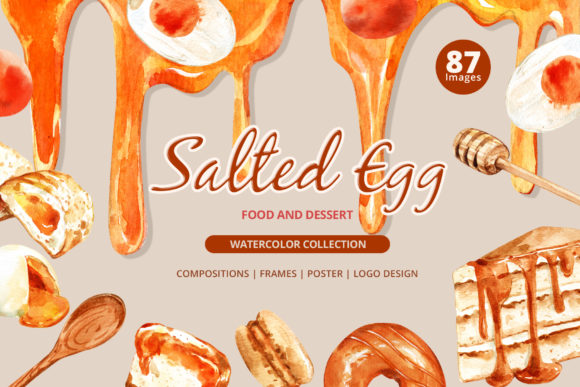
Salted Egg Food and Dessert Watercolor: A Versatile Illustration for Modern Designers
As a professional graphic designer, I'm always on the lookout for design assets that can elevate a project from good to exceptional. Recently, I came across Salted Egg Food and Dessert Watercolor, an illustration set that caught my eye with its delicate textures and warm color palette. This isn't just another generic clipart collection—it's a thoughtfully crafted visual resource that could add a unique touch to various client projects, especially in the realms of food branding, handmade products, and lifestyle content.
First Impressions: Handmade Charm Meets Culinary Appeal
The first thing that stands out about Salted Egg Food and Dessert Watercolor is its soft, hand-painted aesthetic. The illustrations feel organic, almost like they were created by a local artisan rather than mass-produced. The salted egg itself is rendered with a subtle translucency and rich yolk tone, while the surrounding desserts—think pastries, cookies, and tropical fruits—are equally inviting. The style blends realism with whimsy, making it ideal for clients who want their designs to feel authentic yet stylized.
This kind of watercolor illustration naturally fits into handmade business branding, seasonal campaigns, or any project where a cozy, approachable vibe is key. It’s perfect for businesses aiming to communicate warmth, quality, and a personal touch through their visuals.
Real-World Application: From Brand Identity to Print-on-Demand
Let’s imagine a real-world scenario. A small bakery launching an online store wants to create cohesive brand identity and marketing materials that reflect their artisanal values. Salted Egg Food and Dessert Watercolor could be used in logo concepts as supporting imagery, adding a layer of personality without overpowering the main brand mark.
In packaging design, these illustrations work well as background elements or decorative accents. For example, placing the watercolor egg illustration subtly in the corner of a label can enhance the overall mood without clashing with text or other icons. When designing product mockups, such as packaging boxes or social media posts featuring new items, the illustrations help build a narrative around the product’s ingredients and flavor profile.
Performance Across Different Media
- Web Design: The watercolor style adds a soft, welcoming atmosphere to websites and landing pages, particularly for food blogs or subscription-based dessert boxes.
- Editorial Design: These illustrations are great for print or digital magazines focused on food culture, wellness, or lifestyle. They provide a visual break that still maintains thematic consistency.
- Digital Ads: Use them sparingly in hero banners to highlight the uniqueness of a product or service. Their detailed nature works best when there’s ample space to breathe.
- Pinterest and Instagram Posts: The warm tones and natural look make them highly shareable and visually appealing for platforms driven by aesthetics.
- Canva Templates: Incorporating this illustration into templates allows non-designers to create polished graphics with minimal effort, which is essential for bloggers and Etsy sellers.
- Cricut Projects: If available in SVG format, these illustrations can be cut out for sticker design, signage, or even t-shirt design. The detail level is suitable for large-format printing but should be simplified if needed for smaller applications.
- Print-on-Demand: On mugs, tote bags, or wall art, the watercolor illustrations add character and charm. They’re particularly effective when paired with muted backgrounds and clean typography.
Where This Illustration Shines
Salted Egg Food and Dessert Watercolor performs exceptionally well in large layout areas where texture and detail can be appreciated. Think of it as a hero graphic for a homepage banner or a feature image in a blog post about Asian-inspired desserts. Its soft gradients and painterly edges also make it a strong candidate for themed collections and campaign visuals centered around comfort foods or gourmet treats.
For printable designs, such as recipe cards, cooking guides, or event invitations, this illustration brings a sense of authenticity and creativity. In editorial layouts, it can serve as a header or pull quote element, guiding the reader through a story about food innovation or culinary traditions.
Design Considerations and Best Practices
While this asset is undeniably charming, there are a few important considerations for using it in commercial design projects. First, always test how the illustration performs in black and white versions. Watercolor often relies on subtle color variations, so converting it might reduce its visual impact unless you have alternate line-art or grayscale options.
Next, evaluate contrast when placing it over light or dark backgrounds. The soft hues may require a drop shadow or slight desaturation to maintain visibility. Also, preview the illustration at both small and large sizes—especially if it will appear on buttons, menus, or mobile-first interfaces. At smaller scales, intricate details can become lost or muddy.
If you're considering using it for SVG design or vector-based editing, check whether the file supports scalability without pixelation. For PNG designs, inspect transparency layers carefully, as some watercolor illustrations include halftone shadows or paper textures that might not convert cleanly.
Font Pairing Tips
Pairing fonts is crucial when integrating this type of illustration into a larger design system. Here are some suggestions:
- Serif Fonts: Work well for editorial or traditional branding contexts.
- Sans Serif Fonts: Complement modern web and app designs with a clean structure.
- Script Fonts: Match the handmade aesthetic perfectly, especially for luxury or artisanal brands.
- Handwritten Fonts: Enhance the organic feel of the illustrations, ideal for casual or community-driven content.
- Display Fonts: Can create a bold contrast, useful for headlines or title treatments.
When to Approach with Caution
Although Salted Egg Food and Dessert Watercolor is versatile, it’s not a one-size-fits-all solution. It doesn’t perform well in crowded layouts where too many elements vie for attention. Similarly, in professional corporate materials, the watercolor style might come off as too informal unless balanced with more structured design elements.
Use caution when applying it to minimalist branding or projects requiring strict visual hierarchy. The detailed brushwork and soft outlines can blur the focus if not properly managed. Always consider how the illustration contributes to brand consistency and whether it aligns with the core message and audience expectations.
Commercial Licensing Check
Before incorporating Salted Egg Food and Dessert Watercolor into a client project, ensure the asset includes a valid commercial license. Many free or low-cost illustrations come with restrictions, especially regarding resale or use in print-on-demand products. Confirming licensing terms is vital for protecting your work and maintaining professionalism.
Emotional Appeal and Audience Engagement
One of the strengths of this illustration is its ability to evoke emotion. The salted egg symbolizes richness and depth, while the accompanying desserts suggest indulgence and care. These associations can significantly boost audience engagement in food-related content or branding for niche markets like handmade businesses or boutique dessert shops.
Its presence can help create a visual trust between the brand and the consumer. People respond to visuals that feel real and relatable, and this illustration taps into that emotional resonance. Whether used in social media graphics or blog visuals, it helps tell a story and makes the brand more memorable.
Final Thoughts: A Creative Asset Worth Considering
Overall, Salted Egg Food and Dessert Watercolor is a solid addition to any designer’s library, especially those working in the food or lifestyle industries. It offers a unique blend of graphic design assets that can support multiple creative directions—from logo design to merchandise and beyond. As long as you understand its limitations and strengths, it can be a powerful tool in your workflow.
Remember to always place it on real mockups before finalizing a project. Test print quality, review file formats, and assess how it interacts with other design assets in your project. With the right application, Salted Egg Food and Dessert Watercolor can contribute to a more polished and emotionally engaging final result.
So, if you're looking for an illustration that adds a touch of artisanal flair to your next creative marketplace listing or small business branding initiative, this could be exactly what you need.