★★★★☆4.5(124 reviews)
Watercolor Tropical Fruit Clipart Review for Embroidery Projects
First Impressions and Design Mood
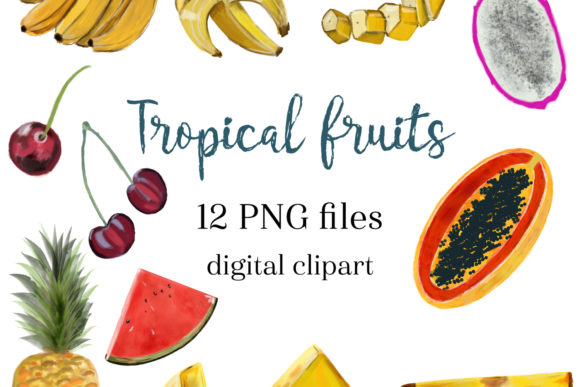
The Watercolor Tropical Fruit Clipart immediately stands out with its soft, organic aesthetic. As a designer who regularly evaluates digital illustrations for real-world embroidery applications, I appreciate how this design evokes a relaxed, tropical vibe without being overly busy or childish. The gentle gradients and hand-painted look suggest a more artisanal feel, which is perfect for handmade products that aim to communicate warmth and quality. Each fruit—pineapple, mango, papaya, guava, and others—is stylized in a way that feels whimsical yet elegant. The shapes are rounded, the colors are muted and inviting, and there’s enough detail to add visual interest without overwhelming the eye. This kind of layout makes it easy to integrate into various embroidery projects while maintaining a cohesive theme. It naturally fits within the broader category of illustrations, but what sets it apart is its adaptability for stitch-based reproduction.Where This Design Thrives
I recently tested the Watercolor Tropical Fruit Clipart on a custom sweatshirt embroidery project for a boutique client looking to launch a line of seasonal activewear. The results were promising. The design’s simplicity paired well with a light gray cotton-blend fabric, allowing the subtle watercolor textures to come through without muddying the overall look.- Tote bag designs where a casual, summery motif is desired
- Custom apparel like hoodies or long-sleeve shirts, especially when using satin stitch outlines
- Baby embroidery items such as onesies or blankets, where softness is key
- Holiday gifts and personalized items, offering a fresh take on seasonal themes
- Embroidered patches or decorative accents on aprons and pillow covers
Performance in Real-Life Embroidery Applications
One of the most important aspects of any machine embroidery design is how it translates from pixel to thread. The Watercolor Tropical Fruit Clipart handles this reasonably well, though some adjustments may be necessary depending on the final application. When converted into an embroidery file, the design maintains a clean structure with clear lines and minimal stitch density. This is a big plus for anyone working with thin or stretchy fabrics. However, the soft shading and watercolor effects don’t always translate perfectly to stitch definition. You’ll need to carefully choose your thread colors and consider whether you want to use fill stitch or running stitch to capture the intended effect. For example, when I used it on a kitchen towel, I found that the texture of the fabric played a major role in how the watercolor details appeared post-stitching. On smooth cotton, the design looked vibrant and true to the original. But on a textured linen blend, some of the subtlety was lost. This is a good reminder to always test the design on scrap fabric first and evaluate how the stabilizer and stitching techniques affect the outcome. Another scenario I considered was applying it to a nursery decor piece. The design’s pastel tones and soft curves made it ideal for a child's room. When stitched with a mix of satin stitch and running stitch, it created a layered, painterly effect that felt both modern and nostalgic. Customers loved how it elevated the product into something unique and thoughtful—a personalized gift that stood out in their shop listings.Design Limitations and Cautions
- Small hoop sizes: The design contains elements that are best suited for larger formats. In smaller hoops, the fine strokes and gradients may get lost.
- Textured or stretchy fabrics: These can distort the soft, flowing lines typical of watercolor styles.
- Dark fabric backgrounds: The muted palette loses impact against darker bases unless you pair it with bold, contrasting thread colors.
- Products that undergo frequent washing: Over time, high stitch density areas might pill or fade, especially if not properly stabilized.
Visual Appeal and Customer Perception
The charm of the Watercolor Tropical Fruit Clipart lies in its ability to elevate ordinary items into something visually engaging. For a small shop product, it adds a touch of sophistication and creativity. Whether it’s a custom sweatshirt for a resort wedding or a holiday gift embroidered onto a throw blanket, the design brings a sense of authenticity and care. In terms of product value, this design can justify a slightly higher price point due to its premium look. Customers tend to respond positively to designs that reflect craftsmanship and intentionality. It also enhances brand consistency if your brand leans toward natural, earthy aesthetics. However, the design isn’t as bold or striking as a solid-color vector illustration. That’s not necessarily a downside—it just means you should use it strategically. Think of it as a supporting element rather than the focal point. For instance, it could serve as a decorative border on a tote bag or a background accent on a printable mockup for digital product previews.Practical Designer Notes for Use
Here are some tips to help ensure the best results when using the Watercolor Tropical Fruit Clipart in your next embroidery project:- Test on scrap fabric first: Especially if you're planning to sell the finished product, seeing how it looks after multiple washes is crucial.
- Check thread color contrast: Opt for thread colors that enhance the watercolor feel while ensuring visibility on the chosen fabric.
- Review stitch density: If you're concerned about durability, adjust fill stitches or opt for lighter coverage.
- Confirm hoop size: Make sure the hoop you plan to use accommodates all elements of the design comfortably.
- Inspect small details: Zoom in on the digital embroidery file to see how tiny brush strokes or corners will render after stitching.
- Use proper stabilizer: A tear-away or cut-away stabilizer can help preserve the design’s integrity, especially on stretchier materials.
- Compare light and dark fabric backgrounds: Try it on a few different shades to understand its versatility.
- Consider black and white mockups: This helps identify potential issues with contrast and clarity before choosing thread colors.
- Check machine compatibility: Always verify whether your embroidery software supports the file format provided.
- Understand licensing: Before selling the design as part of a commercial embroidery product or digital product, confirm whether the clipart allows for resale or redistribution.
Final Thoughts on Project Fit and Professional Use
The Watercolor Tropical Fruit Clipart is a versatile and appealing addition to your design library, but it’s not a one-size-fits-all solution. It shines brightest on mid- to large-sized items with smooth, stable surfaces. Think of it as a design asset that brings a personal, artistic touch rather than a highly technical, industrial one. As someone who frequently reviews and uses embroidery designs for both personal and professional purposes, I recommend this clipart for creative entrepreneurs and crafters aiming to create products that feel handcrafted and unique. It’s less suited for high-volume, mass-produced items unless you’re willing to invest in additional testing and tweaking. Overall, if you’re designing for a boutique line, an Etsy listing, or even a family-friendly personalized gift, the Watercolor Tropical Fruit Clipart can bring a refreshing, artistic flair that customers will notice—and appreciate.
⬇️ Download Free
Free download · No sign-up required
🔗 You Might Also Like
Illustrations
As an embroidery designer with years of experience in both personal and commerci...
Illustrations
As an embroidery designer and product reviewer with years of experience, I alway...
Illustrations
As a professional graphic designer with years of experience working on branding,...
Illustrations
As an experienced embroidery designer and product reviewer, I always approach a ...
Illustrations
If you're an embroidery designer or a small business owner in the craft space, y...
